
Maintaining Marble Worktops to Avoid Stains: A Practical Guide
Published 16 October 2026 · Updated 21 October 2026
What if the pale mark on your marble worktop isn’t a stain at all? Acidic spills such as wine or citrus can dull the surface through etching, which is different from a substance being absorbed into the stone. It’s an easy distinction to miss, especially when you’re concerned that coffee, oil or food might leave a lasting mark. A simple approach to maintaining marble worktops to avoid stains can help you care for the surface with greater confidence.
This practical guide covers a gentle daily routine, what to do when spills happen and how to choose cleaners suitable for marble. You’ll also learn why sealing can slow the absorption of liquids without making marble stain-proof, and how to distinguish a likely stain from etching before trying to treat it. With a few considered habits, you can protect your worktop’s appearance without turning everyday kitchen life into a cause for concern.
Key Takeaways
- Make maintaining marble worktops to avoid stains easier with a simple routine of gentle cleaning and drying.
- Blot spills promptly with a soft cloth instead of rubbing them across the stone.
- Choose marble-safe cleaning products and avoid household cleaners that may damage the surface.
- Look closely at a mark before treating it, as a stain and surface etching need different approaches.
- Use sealing as part of a considered care plan, while remembering it cannot prevent every mark.
Table of Contents
- Why maintaining marble worktops to avoid stains starts with understanding the stone
- A gentle daily routine for maintaining marble worktops and preventing stains
- How to treat spills and stains on marble worktops
- A long-term marble worktop care plan, from sealing guidance to kitchen design
Why maintaining marble worktops to avoid stains starts with understanding the stone
Attentive, gentle care can reduce avoidable marks and help preserve marble’s natural character. Start by considering what a mark might be. Marble is a natural stone, and some liquids can penetrate its surface. A stain is discolouration caused when a substance enters the stone and remains there. The result depends on the liquid, the marble and how long the spill is left in place.
Marble is made largely of calcium carbonate, which also makes it vulnerable to acids. For more background on understanding marble’s composition, it helps to know that acidic substances can react with the stone itself. This creates a different kind of mark: the surface may become dull or altered, even if no coloured substance has soaked in.
Why can marble worktops mark so easily?
Marble can absorb some liquids, so spills such as wine, coffee or oil may leave discolouration if they linger. Different spills can behave differently: coffee and wine contain colour, while oil can leave a darker-looking patch. The ingredients, contact time and particular worktop all affect the result.
The finish and existing protection matter too. Polished and honed marble can show marks differently, and protection may slow liquid absorption without preventing it. That’s why a mark’s appearance alone may not reveal its cause.
Is a marble mark a stain or etching?
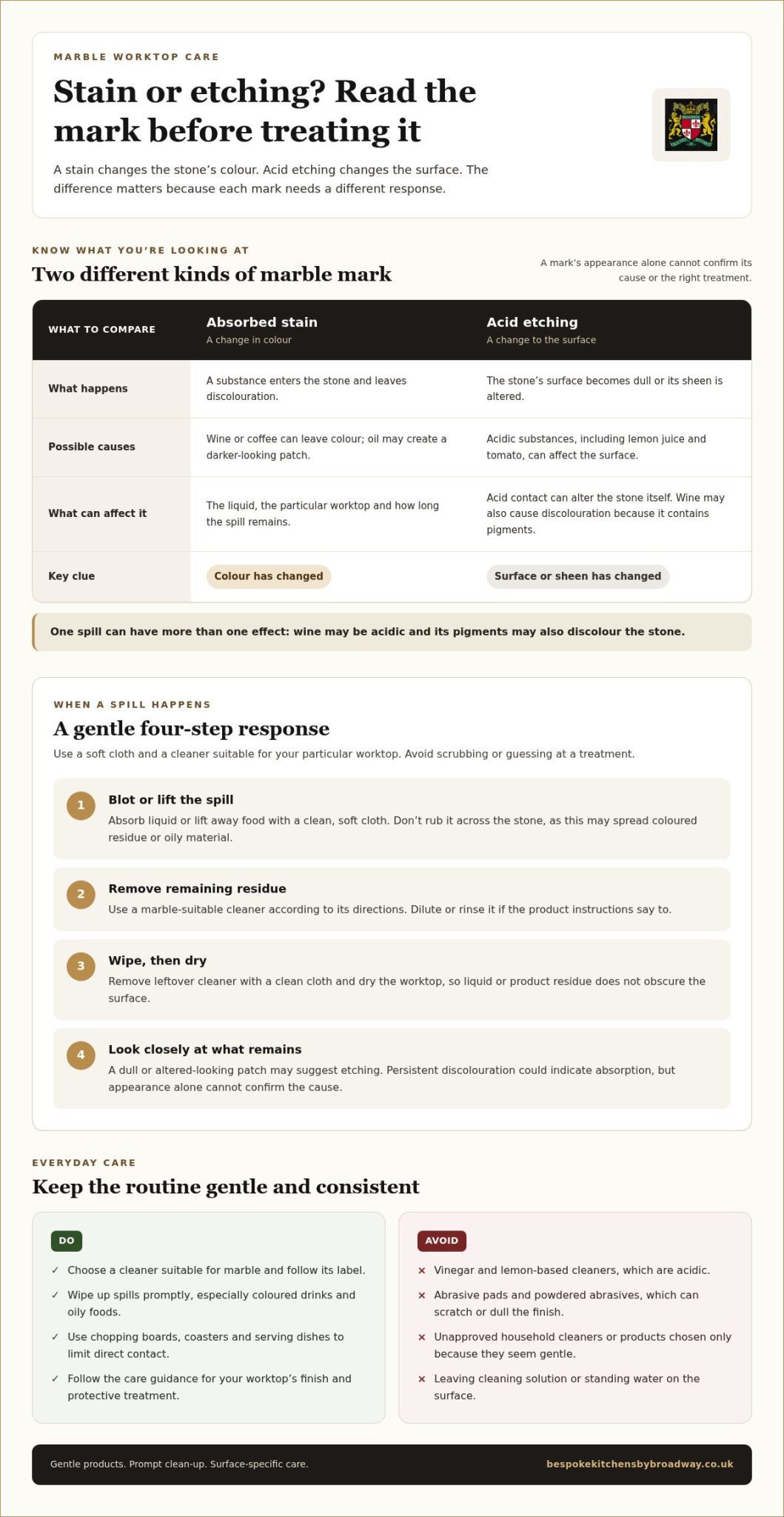
A stain is discolouration from material absorbed into the stone. Etching is a change to the stone’s surface, often visible as a dull patch or altered sheen. Lemon juice and tomato are acidic foods that can contribute to etching. Wine can also be acidic, while its pigments may create discolouration, so a spill can have more than one effect.
An absorbed stain changes the colour of the stone; acid etching changes the surface itself.
This distinction matters because the two marks need different responses. A dull area may be etching rather than a stain, but appearance alone cannot confirm the cause or identify a suitable treatment. Understanding the difference is a useful foundation for maintaining marble worktops to avoid stains and for responding calmly when a mark appears.
A gentle daily routine for maintaining marble worktops and preventing stains
A steady routine needn’t involve specialist equipment or vigorous scrubbing. For maintaining marble worktops to avoid stains, focus on three habits: remove spills promptly, clean gently and dry the surface. Follow the care instructions for your particular worktop, since its finish and protective treatment can affect which products are suitable.
What is a safe way to clean marble worktops every day?
Start with a soft, clean cloth and a cleaner suitable for marble, used according to its label. If the surface-care guidance allows it, a small amount of mild cleaner or a pH-neutral stone cleaner can help lift everyday residue. Don’t assume a product is suitable simply because it is described as natural or gentle. Vinegar and lemon-based cleaners are acidic, while abrasive pads can scratch or dull the finish.
After cleaning, use a clean, damp cloth to remove any remaining product, then dry the worktop with a soft cloth. Don’t leave cleaning solution or standing water on the surface. Drying helps prevent residue from leaving streaks and leaves the stone ready for use.
Which everyday habits help prevent marble stains?
Wipe up spills as soon as you notice them, especially coloured drinks and oily foods. Use a soft cloth to lift the liquid rather than scrubbing it across the worktop. When preparing or serving food, use suitable chopping boards, coasters and serving dishes to limit direct contact between marble and ingredients or drinks.
Keep scouring pads, powdered abrasives and unapproved household cleaners away from the surface. If you’re unsure about a product, read the worktop’s care guidance before applying it. A small, consistent routine is kinder to the finish than repeated attempts to tackle marks with stronger products.
Keep marble care simple: use gentle products, clean up spills promptly and follow the surface-specific guidance. These habits can reduce avoidable marks, although no daily routine can prevent every change to natural stone.
If you’re considering marble as part of a new kitchen, its care needs can be one factor in planning how the space will be used. Broadway Kitchens designs, manufactures and installs bespoke kitchens, and can discuss your wider design in a free design chat. Call 0121 353 4999 or use WhatsApp chat.
How to treat spills and stains on marble worktops
A calm, careful response is best when something spills on marble. First, remove the substance without spreading it or harming the finish. Once the area is clean and dry, assess whether any mark remains. Avoid guessing at a treatment before you have a clearer view of the surface.
What should you do when a spill lands on marble?
Follow this sequence, using a soft cloth and a cleaner suitable for your particular worktop. Don’t scrub, reach for a stronger household product or assume every mark has the same cause.
- Blot or lift the spill. Use a clean, soft cloth to absorb liquid or lift away food. Work gently and avoid rubbing it across the stone, which can spread coloured residue or oily material.
- Remove any remaining residue. Apply a marble-suitable cleaner according to its directions. If the product needs to be diluted or rinsed away, follow those instructions rather than leaving cleaner on the surface.
- Wipe and dry the area. Use a clean cloth to remove residue, then dry the worktop. This gives you a clearer view without a film of liquid or cleaning product.
- Look at what remains. Coloured residue may sit on the surface, while persistent discolouration could indicate that a substance has entered the stone. A dull or altered-looking patch may suggest etching instead.
- Pause before treating a mark. Note what spilled and where, then consult the care instructions for the marble and any sealant. The cause matters: absorbed discolouration and surface damage don’t call for the same response.
What if a mark remains after gentle cleaning?
Stop if gentle cleaning doesn’t clear the mark. Avoid improvised acids, abrasive pads and aggressive stain treatments, which can worsen damage or alter the finish. Don’t apply a remedy intended for one type of mark to another. A persistent coloured patch and a dull area may have different causes, and appearance alone may not settle the question.
Use the surface-specific care guidance for your marble and any applied sealant before considering another step. If the instructions don’t address the mark, avoid experimenting. When dealing with stubborn marks on delicate natural stone and hard surfaces, consulting professional specialists such as The Rutland Cleaning Company can help ensure the material is treated safely. A measured response is always safer than escalating to an unapproved cleaner or scrubbing harder.
Careful kitchen planning includes understanding how chosen materials fit daily use. For help discussing your wider kitchen design, arrange a conversation with Broadway Kitchens.
A long-term marble worktop care plan, from sealing guidance to kitchen design
Good long-term care is consistent, not complicated. Keep the worktop’s care information to hand, follow its cleaning guidance and make a note of advice supplied for the stone and sealant. This gives you a reliable reference if you need to revisit your routine or respond to a mark later.
Sealing can slow the absorption of liquids into marble, giving you more time to deal with a spill. It doesn’t make the stone impervious to spills, stains or acid etching, so gentle everyday care still matters. Treat sealant as one part of protection, not a substitute for prompt clean-up or suitable cleaning products.
How often should marble worktops be sealed?
There isn’t one resealing interval that suits every marble worktop. Timing can depend on the particular surface, how it’s used and the sealant applied. Follow the instructions for your stone and sealant rather than relying on a general timetable or an unverified home test. If you don’t have the care information, obtain the product-specific guidance before applying more sealant.
A practical plan is to keep those instructions with your kitchen documents and review them as part of routine care. Don’t assume a surface needs resealing simply because a set period has passed, or that an additional coat will prevent etching. For dedicated guidance on stone protection and sealing, specialist surface restoration companies like Sealwerx can help you determine the most effective approach for natural surfaces.
How does marble care fit into planning a bespoke kitchen?
Worktop care is useful context when choosing materials for a kitchen. Consider how the space will be used, how much everyday attention you’re comfortable giving the surfaces and how the worktop will sit alongside the rest of the design. These preferences help shape a kitchen that feels beautiful and considered, while suiting the rhythms of home life.
Broadway Kitchens’ bespoke kitchen design guide can help you think through the wider planning process. For a kitchen tailored to your home and priorities, arrange a free design chat by calling 0121 353 4999 or using WhatsApp chat.
Plan a kitchen that feels right for everyday life
Choosing a worktop is also a choice about how you want your kitchen to feel and function. Consider the care a material calls for alongside its appearance, the way you cook and the atmosphere you want to create. That perspective makes maintaining marble worktops to avoid stains part of a broader, thoughtful approach to your home, rather than a search for a surface that never needs attention.
Broadway Kitchens brings three generations of family experience, established in 1974, to bespoke kitchen design, manufacture and installation across the UK. The team serves homeowners across Birmingham, Wolverhampton, Warwickshire, Cheshire, the West Midlands, Staffordshire, Worcestershire, Lincolnshire and Leicestershire. If you’re shaping a new space, take the next step with a conversation about the details that matter to you.
Discuss your kitchen plans in a free design chat. Call 0121 353 4999 or use WhatsApp chat to start imagining a kitchen made to suit your home and the way you live.
Frequently Asked Questions
Is marble completely stain-proof after it has been sealed?
No. Sealing can reduce how quickly liquid is absorbed, but it doesn’t make marble impervious to spills or changes to its surface. A treated worktop may still mark if a spill is left in place, and acidic contact can affect the finish. Blot fresh spills rather than relying on protection. Use the care instructions for your specific stone and sealant, as products and finishes can differ.
Can I use baking soda to remove a stain from a marble worktop?
Baking soda isn’t a safe default for marble, because an improvised paste may not suit your stone or its finish. Don’t apply it unless the care instructions for your worktop explicitly permit it. First consider whether the mark is discolouration or a change in surface sheen, since an etch won’t respond like absorbed residue. If gentle cleaning leaves the mark, stop rather than trying stronger DIY treatments.
How often should marble worktops be resealed?
There is no single resealing timetable that applies to every marble worktop. The right interval depends on the stone, how the surface is used and the instructions for the sealant. Keep those details with the worktop’s care information, particularly if you don’t know what product was applied. Follow its specific guidance instead of treating a general calendar reminder as definitive.
Can water leave marks on a marble worktop?
A mark after water contact doesn’t automatically mean marble has a permanent stain. What you see can depend on the surface’s condition, any residue left as droplets dry and its existing protection. Remove standing water with a soft cloth, then dry gently. Before applying a cleaner or treatment, consult the worktop’s care guidance, especially if the appearance doesn’t clear once dry.
Are vinegar and lemon juice safe to use on marble worktops?
No. Vinegar and lemon juice are acidic and can etch marble, leaving a dull-looking area. They aren’t suitable everyday cleaners for this stone. If a splash lands during food preparation, lift it gently and promptly, then follow the worktop’s care instructions. Don’t try to counter it with another acidic product or scrub the patch, as either response can add to surface damage.
Can washing-up liquid be used to clean marble worktops?
A small amount of mild washing-up liquid may suit some marble routines, but don’t assume it’s right for every stone or finish. As part of maintaining marble worktops to avoid stains, follow the worktop’s care guidance and the cleaner’s directions, using a soft cloth rather than a scourer. Wipe away leftover suds and dry the area. Avoid stronger products labelled acidic, abrasive or harsh.
Related articles

17 October 2026
Bespoke Fitted Furniture Throughout the Home: Create a Cohesive Look
What if a connected home didn’t mean every room matching? Bespoke fitted furniture throughout the home can create a thoughtful design thread without…
Read article
10 October 2026
Bespoke Solid Wood Kitchens: How to Clean and Care for Wooden Cabinets
What if the cleaner meant to make cabinet doors gleam is the very thing that dulls their finish? It’s an understandable concern: bespoke solid wood…
Read article
9 October 2026
West Midlands Kitchen Worktop Comparison Guide
The most striking worktop isn’t always the best choice for a busy kitchen. A surface that catches your eye in a showroom may need more care than you…
Read article
Request your free brochure
See our kitchens in full and talk to us when you are ready.
Prefer to talk? Call 0121 353 4999 or message us on WhatsApp.
Kitchens from £30,000.