
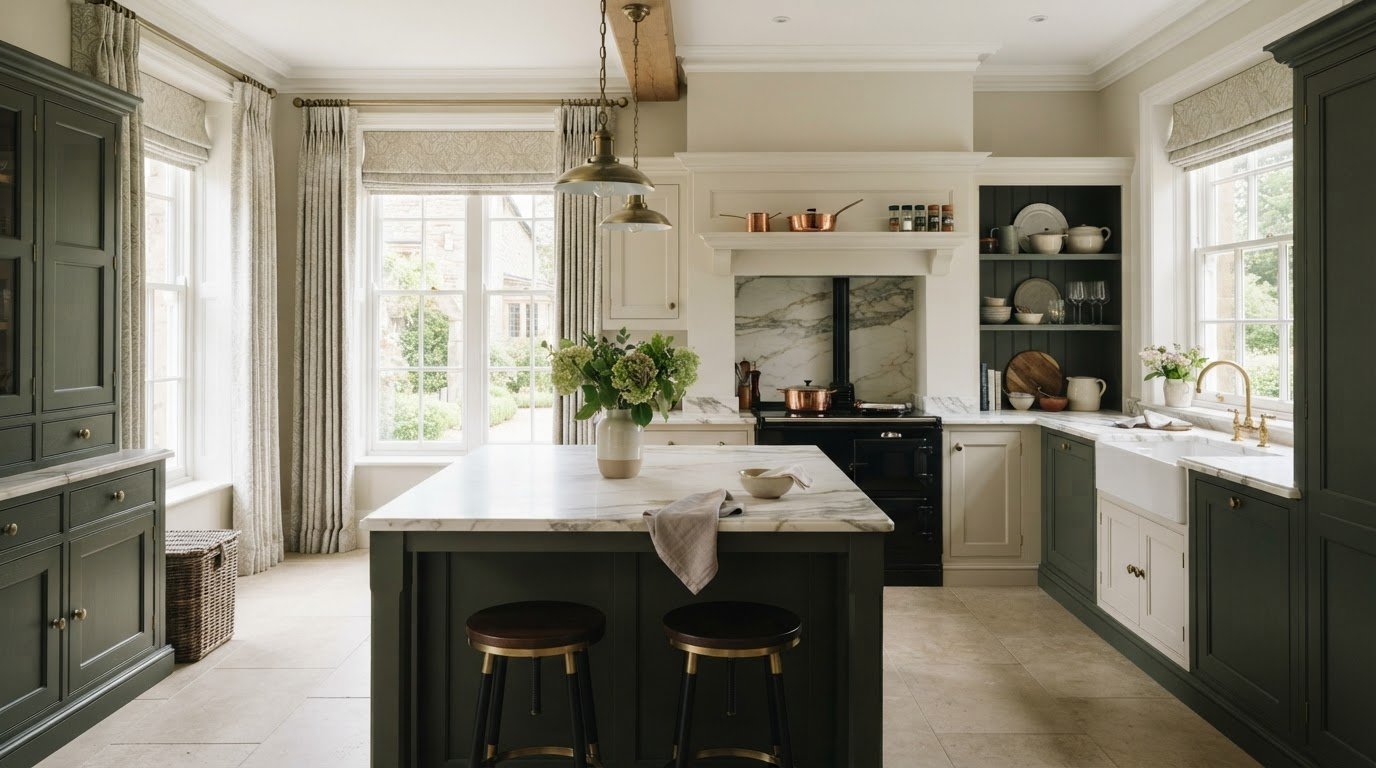
Bespoke Solid Wood Kitchens: How to Clean and Care for Wooden Cabinets
Published 10 October 2026 · Updated 10 October 2026
What if the cleaner meant to make cabinet doors gleam is the very thing that dulls their finish? It’s an understandable concern: bespoke solid wood kitchens bring the warmth and character of natural timber into daily life, yet moisture, grease and an abrasive cloth can leave marks. Caring for them needn’t be complicated, but it should be gentle and suited to the surface.
Whether your cabinets are solid timber or natural veneer, understanding the difference helps you care for them thoughtfully. This guide shares a simple routine for everyday cleaning, including how to tackle ordinary grease and marks with a soft cloth and mild solution, then dry the surface promptly. You’ll also learn which common cleaning habits can be too harsh, why vinegar may not suit every finish, and how to make your care routine responsive to the cabinet’s material and finish. Small, consistent steps can help preserve the character of carefully crafted cabinetry for years to come.
Key Takeaways
- Learn why the cabinet’s surface finish matters as much as the timber when choosing a care routine.
- Follow a considered cleaning sequence that begins with removing loose dust before wiping cabinet doors.
- Discover why vigorous scrubbing can do more harm than good, and how to treat fresh spills with care.
- Find everyday habits that help protect bespoke solid wood kitchens from avoidable wear over time.
- Understand why ongoing maintenance should suit the material and finish, rather than the kitchen style alone.
Table of Contents
- Why solid wood kitchen cabinets need gentle, finish-aware cleaning
- How to clean solid wood kitchen cabinets with a simple routine
- Grease, spills and cleaning mistakes to avoid on wooden cabinets
- Keep bespoke solid wood kitchens looking cared for over time
Why solid wood kitchen cabinets need gentle, finish-aware cleaning
It’s natural to worry about marking a valued kitchen while trying to keep it clean. With bespoke solid wood kitchens, the reassuring starting point is to treat cleaning as careful upkeep, not a task that calls for force. Solid wood cabinets are made using real timber, though a kitchen may also include other materials. The visible surface and its finish influence which products and methods are suitable.
Finish-aware cleaning means choosing a gentle method that suits both the cabinet’s visible material and the finish applied to it. A light touch, limited moisture and the right care guidance are more useful than vigorous scrubbing or applying extra product.
Solid timber, veneer and finish are not interchangeable
Solid timber is wood through the thickness of the piece. Natural veneer is a thin layer of real wood applied to another material, so the visible grain can look similar while the construction differs. A finish is the surface treatment over the timber or veneer. It may affect the cabinet’s appearance and care needs. For background, Wood finishing techniques and materials explains the purpose and variety of wood finishes.
Because materials and finishes vary, one cleaning approach shouldn’t be assumed suitable for every door. Follow the care instructions supplied for your particular cabinetry. If you’re unsure what a surface is made from, avoid experimenting with strong cleaners or treatments.
What everyday kitchen use leaves on cabinet fronts
Fingerprints around handles, cooking splashes near the hob and settled dust are ordinary reasons to wipe cabinet fronts. These marks don’t usually call for aggressive treatment. Start with the gentlest method recommended for your finish, using a soft cloth and only as much moisture as needed. Then follow the supplied care guidance for drying and any further maintenance.
Fresh spills are often simpler to deal with before they dry or spread. Blot or wipe them promptly with a soft cloth, keeping moisture limited rather than soaking the surface. Avoid scrubbing at a mark just because it’s stubborn: extra pressure or product may be unsuitable for the finish. A considered response helps keep routine cleaning gentle and consistent.
How to clean solid wood kitchen cabinets with a simple routine
A calm, consistent method is usually more useful than a cupboard full of cleaning products. For bespoke solid wood kitchens, begin with the cabinet maker’s care instructions, as the right approach can vary with the material and finish. Keep moisture to a minimum, use a clean soft cloth, and work in small areas so you can dry each surface promptly.
A gentle sequence for cabinet doors and drawer fronts
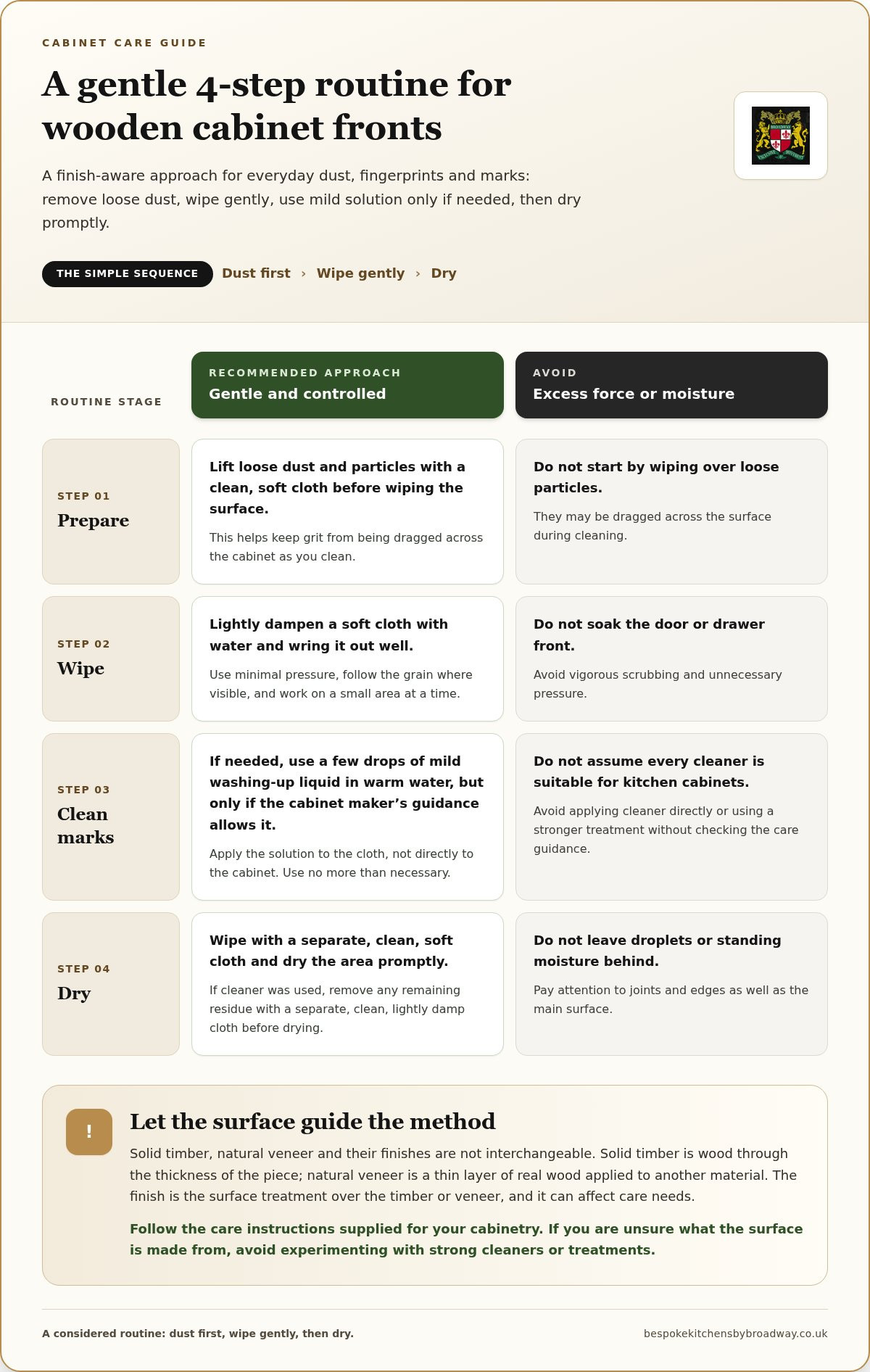
- Remove loose dust first. Use a clean, soft cloth to lift dust and loose particles before wiping. This helps avoid dragging grit across the surface as you clean.
- Wipe a small area gently. Dampen a soft cloth lightly with water and wring it out well. It should feel damp, not wet. Use minimal pressure, following the grain where it is visible, and avoid soaking the door or drawer front.
- Use a mild solution only if needed. For routine marks, a few drops of mild washing-up liquid in warm water may help, provided the cabinet maker’s instructions allow it. Apply the solution to the cloth, not directly to the cabinet, and don’t use more than necessary.
- Dry promptly. Wipe the area with a separate, clean soft cloth. Don’t leave droplets or standing moisture on the surface, around joints or along edges.
The simplest general sequence is: dust first, wipe gently, then dry. It’s a measured routine that clears everyday marks without making force or excess product part of the process. Follow the cabinet maker’s instructions for the specific finish, especially if they recommend a different cloth, cleaner or method.
How often should you clean the cabinets?
There’s no need to impose a rigid timetable on every kitchen. Let visible marks and household activity guide you. A fingerprint beside a handle or a small splash can be cleaned locally as it appears, rather than waiting until it spreads or builds up. A light touch is enough for ordinary traces; tougher grease or residue may need a separate, finish-conscious approach.
Before introducing a new product or method, read the supplied care guidance and avoid combining cleaners. If you’re planning a kitchen and would like to discuss material and finish choices, you can get in touch about your kitchen project.
Grease, spills and cleaning mistakes to avoid on wooden cabinets
A tougher mark can tempt you to scrub harder, but extra pressure isn’t a reliable shortcut to a clean surface. On bespoke solid wood kitchens, it’s wiser to start gently and let the cabinet’s care instructions guide any next step. For a fresh spill, lift it promptly with a soft cloth and limited moisture. Blot or wipe rather than spreading the liquid across the door, then dry the area.
Responding to greasy marks and sticky residue
For a greasy patch near a cooking area or a sticky mark by a handle, begin with the least aggressive method recommended for that finish. Work over a small area with a soft cloth, using minimal pressure. If the care instructions allow it, a mild cleaning solution may help. Don’t assume a product is suitable simply because it’s intended for kitchens.
Once the mark has lifted, remove any remaining cleaner with a separate, clean, lightly damp cloth, then dry promptly. If the residue remains, pause and consult the cabinet maker’s guidance before trying a stronger treatment. Repeated scrubbing can turn a small cleaning task into unnecessary wear on the visible surface.
Cleaning habits that can affect the surface
Abrasive pads and gritty powders may scratch or dull a cabinet surface, even if they seem effective on harder kitchen materials. Avoid soaking doors, and don’t spray excess liquid directly onto fronts, joints or drawer edges, where it can collect. Apply any permitted cleaner sparingly to a cloth instead, then wipe away residue and dry the area.
Take care with products described as natural or multipurpose: that doesn’t automatically make them suitable for every finish. Don’t mix cleaners, or use strong products without finish-specific guidance. Vinegar, oils, waxes, steam and solvents shouldn’t be treated as universal cabinet remedies. Their suitability depends on the particular surface, so follow the supplied care instructions rather than relying on a general tip.
Careful choices matter more than force: address fresh spills quickly, use only guidance appropriate to the finish, and stop if a mark doesn’t respond to gentle cleaning. If you’re planning a bespoke kitchen and want to discuss materials and finishes, talk to Broadway Kitchens about your project.
Keep bespoke solid wood kitchens looking cared for over time
Lasting care is less about a complicated maintenance regime and more about habits that suit the cabinetry in your home. The right approach depends on the material and surface finish, not simply whether the kitchen is Victorian, Shaker or modern. Keep the care instructions for your particular cabinets to hand, and let them guide your choices rather than relying on a one-size-fits-all routine.
Build simple habits that protect cabinet surfaces
Small, consistent actions make everyday upkeep easier. Wipe splashes promptly, dry damp areas and use clean cloths for each task. A cloth that has picked up grit or cleaning residue can transfer it to another door, so rinse or replace it rather than carrying on across the kitchen.
Keep your approach measured. Adding unfamiliar products or repeatedly layering treatments onto a finish can make it harder to know what is suitable. Broadway’s kitchens are made in its in-house Midlands workshops using materials including solid timber and natural veneers. That craftsmanship is one reason to treat the specified material and finish with care. The company’s craftsmanship and company background reflects a considered approach to making kitchens.
When a cleaning question points to a wider kitchen project
Everyday marks are one thing; visible damage or a surface that remains changed after gentle cleaning is another. More scrubbing won’t turn a damage concern into a routine cleaning task. Pause before trying stronger products or treatments, and distinguish the condition of the cabinetry from ordinary dirt.
If you’re planning a new kitchen, material and finish decisions can be considered alongside the layout and the way you use the room. Broadway’s bespoke kitchen design process includes a free design service with computer-generated visualisations, helping you picture the proposed space. Explore the bespoke kitchen design guide for more on shaping a kitchen around your home and preferences.
A thoughtful routine can help keep bespoke solid wood kitchens looking cared for, while a new project offers the chance to consider every detail from the outset. If you’re beginning to plan a bespoke kitchen, get in touch to discuss your ideas.
Shape a kitchen to enjoy for years to come
Choosing a new kitchen is an opportunity to think beyond its first impression: consider how the materials, finish and layout will feel in everyday life, and what kind of care will suit them. With bespoke solid wood kitchens, thoughtful choices at the design stage can help create a space that feels personal and practical, with the character of natural materials at its heart.
Broadway Kitchens is a three-generation family business established in 1974, bringing a considered, personal approach to bespoke kitchen design.
If you’re beginning to imagine a kitchen shaped around your home, share what matters to you, from the look of the timber to the way you cook and gather. Discuss your bespoke kitchen with Broadway Kitchens, and take the next step towards a space made to feel truly yours.
Frequently Asked Questions
Can I use washing-up liquid to clean solid wood kitchen cabinets?
Yes, a small amount of mild washing-up liquid may be suitable if the care instructions for your cabinet finish allow it. Dilute a few drops in warm water, and use the solution sparingly rather than applying it straight to the door. This can help with light everyday marks, but it isn’t a universal recommendation for all bespoke solid wood kitchens. If the finish guidance advises against it, follow that instead.
Can you use vinegar to clean solid wood kitchen cabinets?
Vinegar isn’t a safe default for wooden cabinets. Its acidity may affect some finishes, potentially leaving a dull or discoloured area, and suitability varies by surface. Avoid applying it neat or diluted unless the care instructions for your particular cabinets specifically recommend it. If you’re unsure, stick to the maker’s guidance rather than testing a household remedy on a prominent door.
What happens if water is left on solid wood cabinet doors?
Water left on a cabinet door may leave a mark or affect the surface, particularly if it gathers at an edge, joint or handle. A small splash isn’t automatically a cause for alarm, but it’s sensible to remove it rather than letting it sit. Blot the area with a soft cloth, then dry it. If a mark remains, avoid trying to scrub it away.
Can steam damage solid wood kitchen cabinets?
Steam can expose cabinet surfaces and edges to concentrated heat and moisture, so it’s best not to direct a steam cleaner at wooden doors or drawer fronts. This is especially relevant near joints, where moisture may collect. For routine kitchen cleaning, use the method specified for the cabinet finish instead. A steam cleaner designed for other surfaces shouldn’t be assumed suitable for timber cabinetry.
Is it necessary to oil or wax solid wood kitchen cabinets?
Not necessarily. Whether oil or wax is appropriate depends on the finish: some oiled or waxed surfaces may call for periodic upkeep, while other finishes don’t need those treatments. Applying the wrong product could leave an unwanted surface or affect the appearance. Check the cabinetry’s care instructions before adding oil or wax, and use only the maintenance approach specified for that finish.
Can sunlight change the colour of solid wood kitchen cabinets?
Yes, prolonged direct sunlight may gradually alter the colour of wood or its finish. The effect can be more noticeable on areas exposed beside a window than on shaded sections, creating a difference in tone over time. Where practical, use window coverings during strong sun and avoid leaving one part of a cabinet front consistently exposed. Follow the cabinet maker’s guidance for protecting its particular finish.
Related articles
17 October 2026
Bespoke Fitted Furniture Throughout the Home: Create a Cohesive Look
What if a connected home didn’t mean every room matching? Bespoke fitted furniture throughout the home can create a thoughtful design thread without…
Read article
16 October 2026
Maintaining Marble Worktops to Avoid Stains: A Practical Guide
What if the pale mark on your marble worktop isn’t a stain at all? Acidic spills such as wine or citrus can dull the surface through etching, which…
Read article
9 October 2026
West Midlands Kitchen Worktop Comparison Guide
The most striking worktop isn’t always the best choice for a busy kitchen. A surface that catches your eye in a showroom may need more care than you…
Read article
Request your free brochure
See our kitchens in full and talk to us when you are ready.
Prefer to talk? Call 0121 353 4999 or message us on WhatsApp.
Kitchens from £30,000.